
LuckyTwice UK Licence Check
 Available in GB
The Gambling Commission register did not return a confirmed LuckyTwice entry in this research. That is the central finding for any UK reader using “LuckyTwice UK licence” as a search. The absence of a confirmed register entry is not the same as an official notice that the operator rejects UK players; the brand presents a Great Britain facing page and uses GBP-denominated wording in its welcome offer. The careful reading sits between those two facts: do not treat LuckyTwice as locally licensed, and do not assume that the regulatory cover and dispute routes available at UKGC-authorised operators apply here.
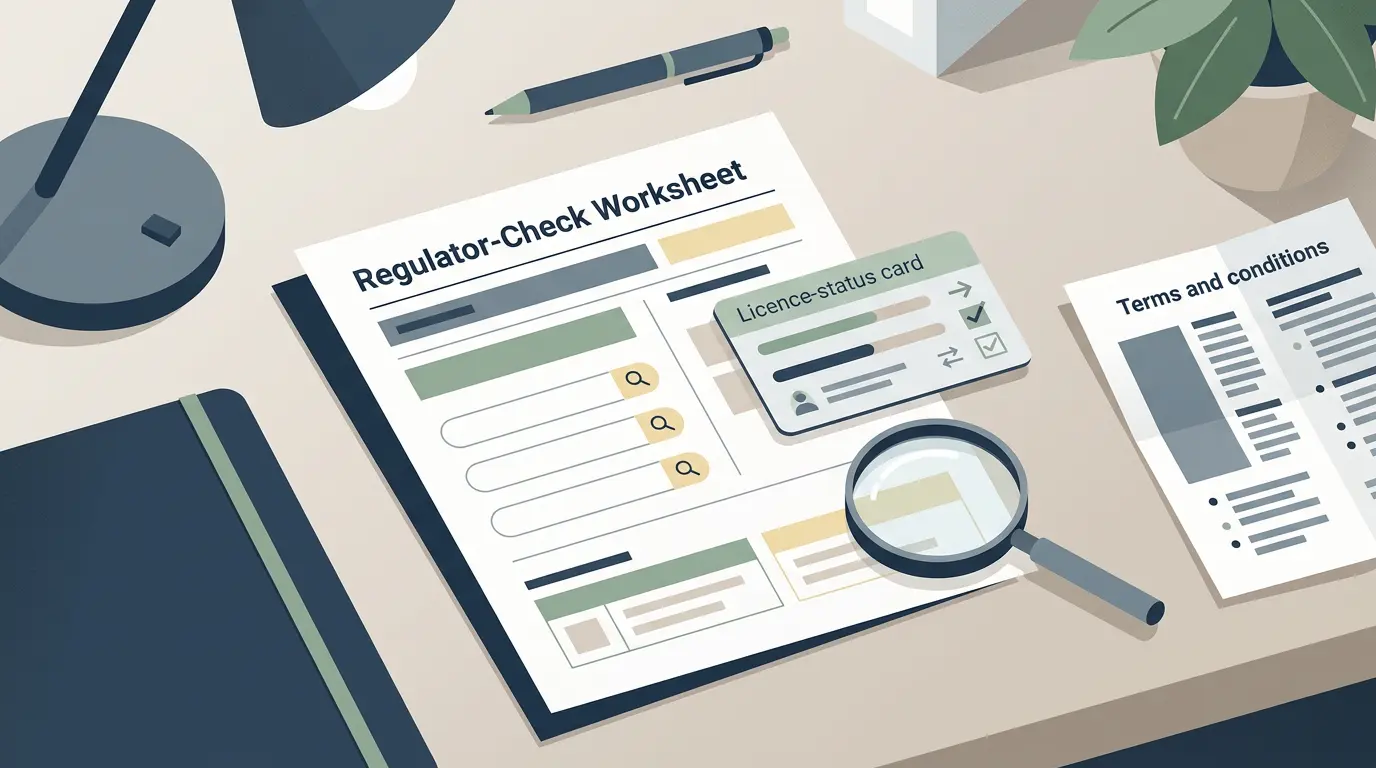
Table of Contents
- What the Gambling Commission licence covers
- Register-check procedure for a reader
- Interpreting an absent or unmatched register result
- Two ideas that should stay separate
- Why this matters for everyday account decisions
- Common licence-check mistakes
- What would change this finding
- Quick licence answers
- Where to go next
What the Gambling Commission licence covers
The Gambling Commission is the statutory regulator for remote gambling offered to consumers in Great Britain. The standard authorisation for an online casino is a remote casino operating licence. The framework around it includes licence-objectives compliance, advertising standards aligned with industry codes, account-control expectations such as deposit limits and self-exclusion, technical standards covering games and random-number generators, and dispute escalation through approved alternative-dispute-resolution providers.
An operator that holds a remote casino operating licence appears on the Gambling Commission’s public register with the operator name, the licence number, the activities authorised under the licence and the licence status. A UK reader can search the register by operator name, by trading name and by licence number. A successful match confirms that the operator is currently authorised to provide remote casino activities to consumers in Great Britain.
Register-check procedure for a reader
- Go to the Gambling Commission’s public register.
- Search for the trading name as displayed on the operator’s site – in this case, “Lucky Twice” and “LuckyTwice”.
- Search for the operating entity that appears in the legal footer of the operator’s site, if shown.
- Search for the domain – “luckytwice.com” – in case the register cross-references domains.
- Note any related licence numbers and the activity scope of each.
- Compare the operator name shown in the live legal footer against any register match.
If no result matches the trading name, the domain or the legal-footer entity, the reasonable conclusion is that no current Gambling Commission entry has been identified. That is the position recorded for LuckyTwice in this research.
Interpreting an absent or unmatched register result
An absent register result is informative, but it has limits. It tells a UK reader that the operator could not be matched to a current public-register entry on the names searched. It does not tell the reader why – it could mean the operator is not licensed in Great Britain, it could mean the legal entity uses a different name on the register than on its marketing site, or it could mean the search terms used did not match exactly. The cautious response is to widen the search, check the operator’s legal footer for any alternative name and recheck the register periodically rather than to treat the first absent result as final.
An unmatched result on multiple searches – by trading name, by domain and by legal-footer entity – is a stronger signal. The careful framing then becomes: no current Gambling Commission entry has been identified, and therefore the brand should not be treated as locally licensed unless a future check returns a clear match.
Two ideas that should stay separate
UK readers who are searching for licence information often mix two distinct questions into one. The first is whether the operator holds a current local licence. The second is whether the operator accepts accounts from the reader’s location. These are not the same.
| Question | Reading for LuckyTwice |
|---|---|
| Holds a current UK Gambling Commission remote casino operating licence? | Not verified in this research. The public-register check did not return a confirmed entry. |
| Accepts UK registrations and shows UK-relevant content? | A Great Britain facing page and GBP-denominated welcome wording were observed. No confirmed hard-stop on UK access has been identified. |
| Provides UK-aligned consumer protection routes? | Without a current UKGC entry, the standard UK dispute-route assumptions cannot be relied on. Internal complaint handling depends on the operator’s chosen process. |
The first answer determines the regulatory framework. The second answer affects whether a reader can sign up at all. Treating these as the same question leads to two common errors: assuming a working UK-facing page implies local licensing, or assuming an absent licence implies a hard block on UK access.
Why this matters for everyday account decisions
The licence status shapes day-to-day account experience in ways that are easy to underestimate before depositing. Marketing rules differ. Operators on the UKGC register operate under specific advertising and bonus-presentation rules; operators outside it operate under whatever rules their actual regulator imposes, which may be lighter on consumer-protection wording. Dispute routes differ. UKGC licensees use approved alternative-dispute-resolution providers and report key metrics; players at non-listed operators rely on the operator’s chosen process.
Account-control standards differ. UKGC licensees participate in the GAMSTOP self-exclusion scheme. A UK player who self-excludes through GAMSTOP is excluded from licensees, but that exclusion does not automatically apply to operators that are not licensed by the Gambling Commission. Tax framing also sits differently. For ordinary UK players, gambling winnings are generally not treated as taxable trading income, but tax language should stay cautious and is rechecked before publication; the broader tax and regulation framing lives on the UK rules page.
Common licence-check mistakes
- Reading a GB-facing page or a sterling welcome figure as proof of UK authorisation.
- Stopping the register search after a single name and missing the operating entity.
- Treating an aged third-party rating as the current regulatory position.
- Confusing accreditation from a games-testing laboratory with an operating licence.
- Quoting a foreign-jurisdiction licence as if it were equivalent to a UKGC licence.
Each of these mistakes is easy to make. The defence is the same in every case: the Gambling Commission’s own public register is the only authoritative source for whether a remote casino operator is currently licensed to serve Great Britain.
What would change this finding
The finding would change if a current Gambling Commission public-register entry were identified for the trading name, the operating entity in the legal footer or the domain, and if that entry covered remote casino activity. UK readers can verify this directly at the Gambling Commission’s register and should treat any third-party page that claims a UKGC licence as a prompt to check, not as a substitute for the check itself.
Quick licence answers
Is LuckyTwice licensed by the UK Gambling Commission?
No UK Gambling Commission licence for LuckyTwice was verified in this research. Treat any UKGC-licensed claim as unsupported unless rechecked in the public register.
Does the absent register match mean LuckyTwice is illegal in the UK?
No. An absent register match is not a regulator notice. It means a current licence entry has not been identified on the searches performed. Operational reach and regulatory authorisation are separate questions.
Can a foreign-jurisdiction licence cover UK players?
A foreign-jurisdiction licence does not substitute for a UK Gambling Commission licence for remote gambling offered to consumers in Great Britain.
Where can I check the register myself?
Go to the Gambling Commission’s public register and search by trading name, operating entity and domain. Match any result against the operator’s live legal footer.
Where to go next
Continue to the broader trust and safety overview, the UK regulatory context, the main LuckyTwice UK review for the overall verdict and the licence FAQ for short answers.
Created by the ”Lucky Twice Casino” editorial team.